
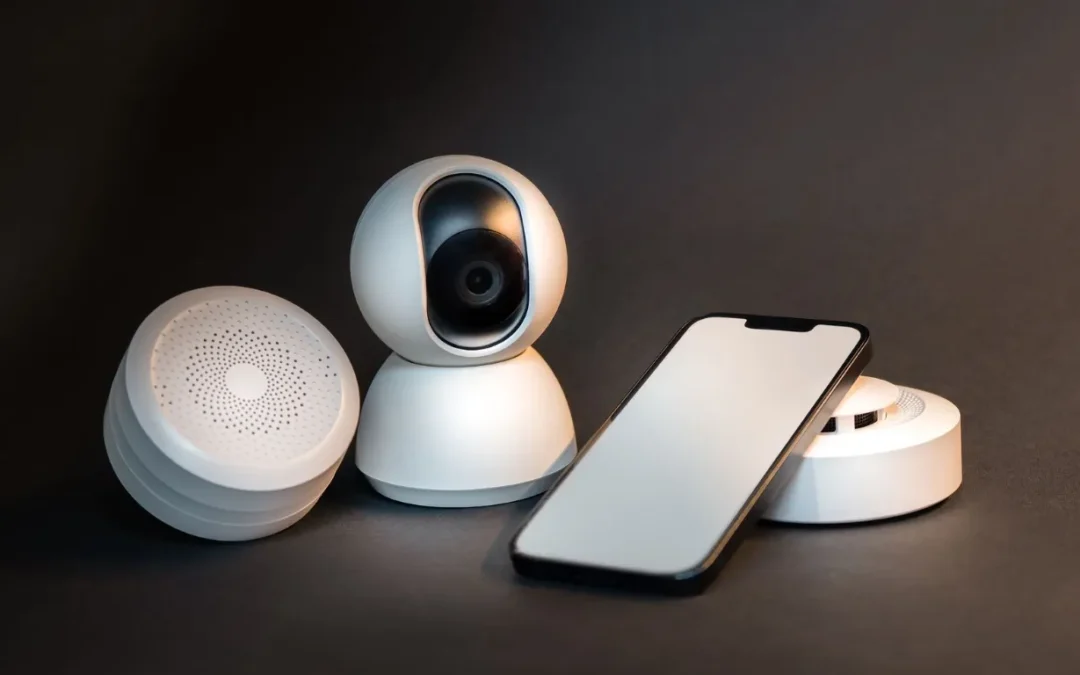
It’s one of the decisions people struggle with most when getting an alarm: should I connect it to a receiving centre and pay a monthly fee, or go for an alarm with no fee that I manage myself from my phone? Some people are certain one way, others the opposite way, and both can be right, because it depends on the property, how it’s used and the person.
In this article we compare both options honestly: what each gives you, what it doesn’t, what it costs over time and when we recommend one or the other. It’s the same explanation we give our Costa Blanca clients at their kitchen table when they ask.
The two options in a nutshell
Alarm with no monthly fee (self-monitored)
You install the system, pay once and manage it from the app. When it goes off, you get the notification (along with anyone you choose), you see the photos from camera detectors if you have them, and you decide what to do: call a neighbour, call the police or confirm it was a false alarm.
Monitored alarm (connected to a receiving centre)
As well as alerting you, the system sends signals to an alarm receiving centre with operators 24/7. They verify the alarm, contact the people on your list and, if it’s confirmed as real, notify the police. This service is provided by an authorised private security company and has a monthly fee. We explain it in detail in our article on alarm monitoring in Spain.
Quick comparison
| Aspect | No fee | Monitored |
|---|---|---|
| Who gets the alert | You and your contacts, via the app | You plus a 24/7 receiving centre |
| Alarm verification | You do it (photos, calls) | The centre does it under Spanish rules |
| Calling the police | You decide | The centre does it if the alarm is verified |
| Monthly cost | None (except a SIM, if used) | Monthly service fee |
| Technical requirements | Any system | At least grade 2, installed and maintained by an authorised company |
| If you miss the alert | Nobody reacts | The centre still handles it |
Pros of an alarm with no fee
- No fixed costs: you pay for equipment and installation, and that’s it.
- Full control: you decide who’s alerted and how to react.
- No tie-ins or service contracts.
- Works well with image verification: with camera detectors you can see in seconds what happened.
- Upgradeable: a professional grade 2 system can be monitored later without changing the equipment.
Cons of an alarm with no fee
- It depends on you: in a meeting, on a plane or asleep, the alert may go unanswered.
- Harder from abroad: coordinating a response from another country isn’t easy.
- You decide whether to call the police, without a professional centre’s verification and protocol.
- More burden on family or neighbours, who become your “receiving centre”.
Pros of a monitored alarm
- Someone is always there to handle the signal, at any hour, every day of the year.
- Professional verification before the police are called, as Spanish law requires.
- A clear protocol: who to call, in what order, password, who holds keys.
- More peace of mind for empty homes and businesses closed at night.
- Your insurer may value it, depending on the policy.
Cons of a monitored alarm
- A monthly fee that adds up over the years.
- Tie-ins with some offers, worth checking.
- Technical requirements: at least grade 2 and regular maintenance.
- Less direct control over how each alert is handled, although you set the protocol.

What each option costs over time
To compare fairly, look at the total cost over several years, not just the first payment. As a rough guide on the Spanish market, monitoring fees range from around €25-30 a month for basic services to €50-60 or more for full services. Over five years, the difference between paying a fee or not can be several thousand euros.
The question isn’t only what it costs, but what it saves you: a burglary caught in time in an empty house, a flood flagged at 3am, or simply not having to watch your phone constantly. We break down costs in how much a home alarm costs in Spain.
When we recommend each option
No fee makes sense if…
- You live in the property all year and are usually nearby.
- You have trusted neighbours or family a few minutes away.
- You check your phone straight away and prefer to decide yourself.
- You have camera detectors for quick verification.
- What you’re protecting is of moderate value.
Monitoring makes sense if…
- It’s a holiday home left empty for weeks or months.
- You live outside Spain much of the year.
- It’s a business left alone every night.
- Older people live alone and you want a professional response to an SOS button.
- Your insurer values or requires it.
Three typical Costa Blanca situations
A family living year-round in a Finestrat townhouse
They work locally, the children go to school in the village and they have long-standing neighbours. An alarm with no fee, camera detectors and alerts to both phones is usually enough. On holiday, a neighbour also gets the alerts.
A retired British couple with a villa in Altea
They’re here from October to May and in the UK the rest of the year. For five months the house is empty. We recommend monitoring, flood and smoke detectors, and a local key-holder. The fee makes sense because when they’re away, nobody could react in time.
A small shop in central Benidorm
Closed every night and on Sundays; the owner lives twenty minutes away. Monitoring adds a lot: someone handles a 3am signal, verifies with images and, if needed, calls the police.
Questions to ask if you choose monitoring
- What the fee includes: reception only, image verification, maintenance, key-holding, response visits.
- Whether there’s a tie-in and what happens if you cancel.
- Who owns the equipment.
- Which languages the centre can deal with you in.
- How the protocol is updated when your contacts or schedule change.
- Whether false alarms or unnecessary call-outs are charged.
The middle way: start with no fee, connect later
Many clients choose a middle path: install a professional grade 2 system, use it without a fee for a while and, if their situation changes, connect it to a receiving centre without changing the equipment. What we don’t recommend is the opposite: buying a very basic kit “because I won’t pay a fee” and then finding it can’t be monitored because it doesn’t meet the required grade.
Signs your no-fee alarm is no longer enough
- You’ve started spending more time away.
- You’ve missed important alerts.
- Your trusted contacts are no longer nearby.
- You’ve started letting the property.
- You’ve opened a business or keep more valuable items at home.
What Spanish law says
An unmonitored alarm is perfectly legal in a home or in a business that isn’t legally obliged to have specific security. Once an alarm is connected to a receiving centre, however, private security regulations apply: Ley 5/2014 reserves that service for authorised companies, and Order INT/316/2011 sets requirements such as the minimum system grade (grade 2), verification of alarms before the police are notified, and regular maintenance. That’s why you can’t simply “sign up” any alarm with a receiving centre: the system and installation have to meet those conditions.
Getting the most from an alarm with no fee
- Add several people to the alerts: you, your partner, a relative and a trusted neighbour.
- Use camera detectors at key points so you can verify instantly.
- Set notifications properly, so alarm alerts sound even when your phone is on silent.
- Have a clear plan: what to do if it goes off at night, who to call, who has a key.
- Check the system regularly: batteries, communications and users.
Common mistakes when deciding
- Choosing only on the fee, without thinking about who’ll react when it goes off.
- Signing long tie-ins without working out the total cost.
- Buying a system that can’t be monitored later.
- Thinking monitoring prevents burglary: it reduces risk and speeds up the response, but no alarm makes a home invulnerable.
- Forgetting contacts: with either option, having people nearby who can be reached is essential.
Where do cameras fit in?
Cameras complement both options but don’t replace monitoring: nobody watches them permanently unless you take out a specific service. With a no-fee alarm, cameras and photo detectors help you verify; with a monitored alarm, they help the centre verify faster.
How we help you decide at SystemDe
During the survey we explain both options with clear figures for your case. We install grade 2 AJAX systems you can use with no fee from day one and connect to a receiving centre whenever you like, without changing the equipment and with no tie-in. See what’s included on our alarm systems page.

Frequently asked questions
Does an alarm with no fee call the police?
Not directly. It alerts you and your contacts, and you decide whether to call the police.
Can I connect my alarm to a receiving centre later?
Yes, if the system is at least grade 2 and installed and maintained by an authorised company.
How much is a monitoring fee?
Roughly from around €25-30 a month for basic services to €50-60 or more for full services.
Is an alarm with no fee less secure?
The equipment can be exactly the same. The difference is who handles the alert.
Which is better for a holiday home?
In most cases, monitoring, because nobody is nearby to react.
Shall we look at your case?
There’s no single answer: for some homes a fee makes no sense, for others not having one is an unnecessary risk. If you’re weighing up the two for your Costa Blanca home or business, we’ll explain them with clear figures for your situation. Request your no-obligation quote.
Recent Comments