

“If the alarm goes off, who actually knows about it?” It’s probably the question we hear most when we visit homes and businesses on the Costa Blanca. And it’s a fair one: an alarm sounding in an empty villa, in a quiet urbanisation in the middle of February, may go completely unnoticed. That’s where an alarm receiving centre comes in, known in Spain as a CRA (central receptora de alarmas).
In this article we explain clearly what an alarm receiving centre is, how it works, what exactly happens when your alarm is triggered, what Spanish law says and when it’s worth having your alarm monitored. No small print and no promises nobody can keep.
What is an alarm receiving centre?
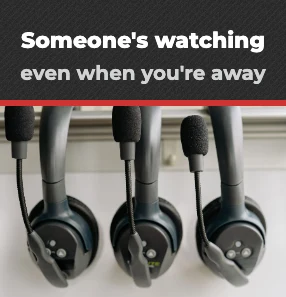
A receiving centre is a control room where operators work 24 hours a day, 365 days a year, receiving signals from connected alarm systems. When your alarm detects something, as well as alerting your phone, it sends a signal to the centre. There, an operator sees the alert, checks the details of your installation and acts according to the protocol you’ve agreed.
In Spain, not just anyone can offer this service. The Private Security Act (Ley 5/2014) reserves the connection and management of alarms at receiving centres for authorised private security companies. Order INT/316/2011, on the operation of alarm systems, sets out how connected systems must be designed and how signals are handled.
What signals does the centre receive?
Not everything that reaches a receiving centre is a burglary. A well-configured system sends different types of events:
- Intrusion: a motion detector or door contact is triggered while the system is armed.
- Panic or hold-up: someone presses an emergency button.
- Tamper: an attempt to open or remove a device, or to jam communications.
- Technical faults: power failure, low battery, a device losing connection.
- Technical alarms: smoke, flooding or temperature, if you have those detectors.
- Arming and disarming: so the centre knows when the system is set and unset, and by whom.
Each type of signal is handled differently. A low battery isn’t treated the same way as an intrusion confirmed by images.
What happens when your alarm goes off: step by step
1. Detection and signal
A detector is triggered while the system is armed. The alarm hub sends the signal via the available channel (wired network, SIM or wifi, depending on the equipment) to the receiving centre and, at the same time, to your app.
2. Reception and verification
The operator receives the event and, crucially, tries to verify whether it’s a real alarm. Spanish regulations require an alarm to be verified before the police are notified. The verification methods in Order INT/316/2011 include sequential verification (several different detectors triggered), image verification, audio verification and personal verification, among others.
3. Calls according to your protocol
While verifying, the centre usually calls the people you’ve nominated, in the agreed order, to confirm whether you’re at home, whether it was a mistake or whether nobody should be there. That’s why it’s so important to keep contacts up to date and have a password to identify yourself.
4. Police notification if the alarm is genuine
If the alarm is verified as real, the centre reports the incident to the relevant police force. From then on, the response is up to them: no reputable company can promise you a specific arrival time.
5. Key-holding and response service (if included)
Some companies offer an extra service in which their staff go to the property to check the situation, provide access or hold keys. Not every contract includes it, so ask specifically.
Why image verification makes all the difference
For years, the big problem with monitored alarms was false alarms: a curtain, a pet, a badly installed sensor. Every false alarm means calls, call-outs and, if it keeps happening, losing faith in the system.
Motion detectors with built-in cameras have changed that. When triggered, they send a series of photos to the centre and to your app. The operator can see within seconds whether there’s a person or just the cat. That means:
- Faster verification of a genuine intrusion.
- False alarms ruled out without fuss.
- More information for the police when the incident is reported.
These detectors only take images when the system is armed and something is detected, which protects the privacy of whoever lives in the house.

What a system needs to be connected to a receiving centre
Not every alarm can be connected to a receiving centre. These are the basics set by Spanish regulations, which we check on every installation:
- Security grade: Order INT/316/2011 classifies systems from grade 1 to 4. To be monitored, a system must be at least grade 2, which is standard for homes and small businesses.
- Certified equipment: devices must meet the technical standards for the system’s grade.
- Installation by an authorised company: connected systems must be installed and maintained by security companies authorised to do so.
- Regular maintenance: the rules require periodic checks of connected systems to make sure they work properly.
- A contract with the receiving centre: setting out the response protocol, contacts and service conditions.
Is it worth having your alarm monitored?
It depends on your situation. These are the questions we usually ask:
How long is the property empty?
If you live there all year with neighbours nearby, an alarm with phone alerts may be enough for many people. For a holiday home left empty for months, or premises closed every night, monitoring makes far more sense.
Can you always respond to alerts?
Getting a notification at 4am while you’re in London or Amsterdam isn’t much use if there’s nobody to react. The receiving centre takes care of that.
What needs protecting?
A beach apartment with few valuables isn’t the same as a villa with artwork, a medical practice or a shop full of stock. The more value at stake, the more sense professional monitoring makes.
Does your insurer require it?
Some policies value or require a monitored alarm. It’s worth checking before you decide.
If you’re still at the earlier stage of choosing a system, our guide on how to choose a home alarm system in Spain may help. For commercial premises, see our guide to business alarm systems.
Monitoring for owners who live abroad
On the Costa Blanca, many of our clients are British, Irish, Dutch, Belgian or Scandinavian and spend a few months a year here. For them, monitoring solves a very specific problem: someone responds even when they’re 2,000 kilometres away.
In these cases we recommend a few specific adjustments:
- A trusted local contact (a neighbour, property manager or maintenance company) who can go round if needed.
- International phone numbers on the contact list, with the right prefix and in the right order depending on the time of year.
- Technical detectors for flooding and smoke, also connected to the centre, because in an empty house a water leak can cause more damage than a burglary.
- Individual app users for everyone who enters the house, so the centre knows whether a disarm is legitimate.
- Language: if you don’t speak Spanish fluently, ask whether the centre can deal with you in English.
Receiving centre and cameras: not the same thing
We’re sometimes asked whether cameras you can view on your phone are the same as a monitored alarm. They’re not. Cameras let you see what’s happening, but nobody is watching them permanently unless you take out a specific video monitoring service. The receiving centre, on the other hand, receives and handles every alarm signal. The ideal is to combine both: the monitored alarm detects and the centre manages the response; cameras and photo detectors provide the visual information to verify.
Setting up the protocol properly
- A contact list in priority order, with phone numbers that actually get answered.
- A password to identify yourself, and a duress word if the company offers one.
- Who holds keys or how the property can be accessed if needed.
- Usual arming and disarming times, especially for businesses.
- Authorised people (cleaner, gardener, property manager) and how they identify themselves.
What a call from the centre looks like
Many clients are surprised the first time the receiving centre calls them, so it helps to know what to expect. Typically, the operator introduces themselves, tells you which alarm has been triggered and in which zone, and asks you to give your password. If you’re at the property and it was a mistake, you confirm it with your password and the incident is closed. If you’re not there and nobody should be, the operator continues with the protocol: checking the images, calling the next contact and, if the alarm is verified, notifying the police.
Two practical tips: save the centre’s number in your phone so you recognise the call, and make sure everyone on your contact list knows the password and what to do. A call answered quickly and clearly makes everything run more smoothly.
Common mistakes with monitored alarms
- Out-of-date contacts: someone who’s moved away, or a Spanish phone nobody uses in winter.
- Not reporting changes: building work, new tenants, new pets or new staff entering the house.
- Forgetting to disarm on arrival and not answering the centre’s call.
- Detectors without verification in areas prone to false alarms.
- Thinking monitoring guarantees there won’t be a burglary. It greatly reduces the risk and speeds up the response, but no alarm makes a home invulnerable.
How much does alarm monitoring cost in Spain?
Monitoring usually carries a monthly fee that depends on the type of service (reception only, with image verification, with key-holding, etc.) and the security company providing it. As a rough guide, fees range from a few tens of euros a month for basic services to higher amounts for comprehensive business services. What matters is knowing exactly what’s included and whether there’s a tie-in.
How we work at SystemDe
At SystemDe we install AJAX systems ready to be connected to a receiving centre, with photo verification detectors and several communication channels. During the survey we explain your options, the grade your installation needs and how the protocol would work, so you can decide with all the facts. Find out more on our alarm systems page.
Frequently asked questions about alarm receiving centres
What’s the difference between a monitored alarm and one that only alerts my phone?
One that only alerts your phone depends on you seeing the alert and reacting. A monitored alarm also sends the signal to operators working 24/7 who verify it and, if it’s real, notify the police.
Does the centre call the police every time the alarm goes off?
No. Under Spanish regulations, the alarm must be verified before the police are notified. That’s why image verification is so useful.
How long do the police take to arrive?
That depends entirely on the police and the situation at the time. Be wary of anyone promising a specific response time.
Can any alarm be connected to a receiving centre?
No. The system must be at least grade 2, use certified equipment and be installed and maintained by an authorised company.
What happens if the power or internet goes down?
A good hub has a backup battery and more than one communication channel, so it can keep sending signals if one fails.
Can I speak to the centre in English?
It depends on the company providing the service. If you don’t speak Spanish fluently, ask this before signing up.
Want to know if monitoring is worth it for you?
If you have a home, holiday home or business on the Costa Blanca and you’re weighing up phone alerts against a monitored alarm, we’ll explain your options clearly and with no obligation. Request your quote and we’ll look at your case.
Recent Comments